Chkdsk Goes counts to 75 Then Goes Down to 50 Again
CHKDSK has been around since before the days of Windows. This utility has in some ways changed dramatically for new environments and new disk formats. Notwithstanding in other ways, it'southward pretty much the same onetime disk checking utility that we've been using since the days of DOS.
Regardless of its age or origins, CHKDSK is an important tool for disk maintenance and recovery (in some cases) from a multifariousness of disk-related issues.
Let's run CHKDSK.
CHKDSK on a non-system bulldoze
The simplest usage of CHKDSK is on a drive that is not your system (Windows) drive.
In Windows Explorer, correct-click on the drive you want to check.
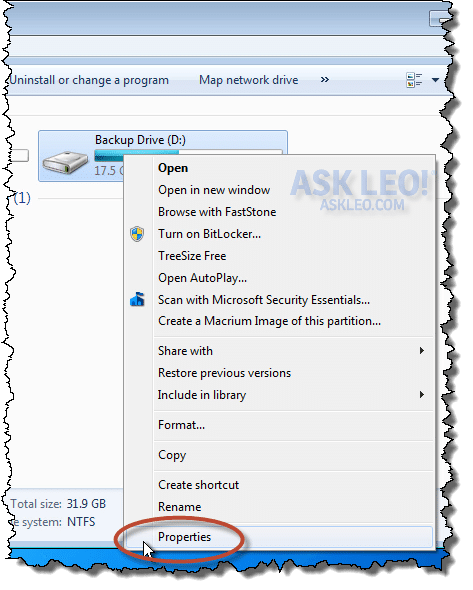
ClickProperties. In the resulting dialog box, click the Tools tab.
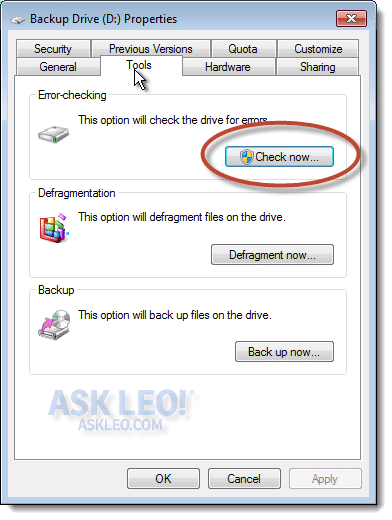
Click the Check now… button.
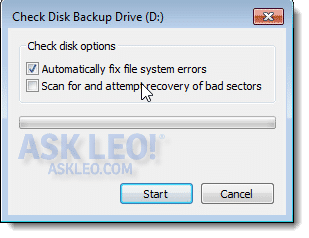
There are two options presented before CHKDSK begins its work:
- Automatically set up file organization errors. If not checked, CHKDSK will simply report,but non set up, whatever problems that it finds.
- Scan for and attempt recovery of bad sectors. This is a more fourth dimension-consuming scan of the deejay that I'll hash out below.
In general, the default setting is fine when y'all doubtable there is a problem that needs to exist fixed.
Click Start, and y'all may get this message:
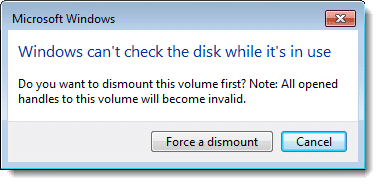
CHKDSK can simply check or repair a disk when it is the merely program using that disk; fifty-fifty the residuum of Windows cannot be accessing the deejay while CHKDSK does its job. Forcing a dismount makes that happen. If a program is actually accessing the drive or files on the drive near to be dismounted, the former "results are unpredictable" phrase applies. Programs may merely notice and do the right thing; they may crash or something inbetween.
That's why the common advice is to close nearly programs when running CHKDSK, or at least make sure none can access the bulldoze you're nigh to check.
Click Force a dismount and CHKDSK begins its work.
Eventually, this is the message you promise to run into:

"Run across details" displays a log of CHKDSK's activity. Any errors to be repaired would be listed here.
CHKDSK on a system drive
Call back how I said CHKDSK requires exclusive admission to the drive in guild to exist able to repair it? And that even Windows tin't exist accessing the disk?
That presents a problem when you want to CHKDSK the organisation drive – typically your C: drive. If Windows is running, then by definition, information technology accesses the arrangement drive near constantly.
The solution is to run CHKDSK before Windows runs.
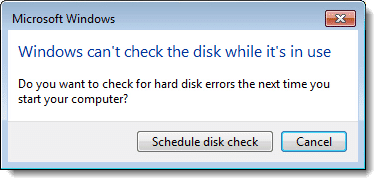
If yous attempt to CHKDSK your system bulldoze, instead of getting the option to dismount information technology (not something that can be done while Windows is running), you'll get a message offer to run the CHKDSK earlier Windows is loaded the adjacent time you reboot.
Click Schedule disk bank check. Now, reboot your machine. Every bit the machine reboots, you'll see something like this before Windows loads:
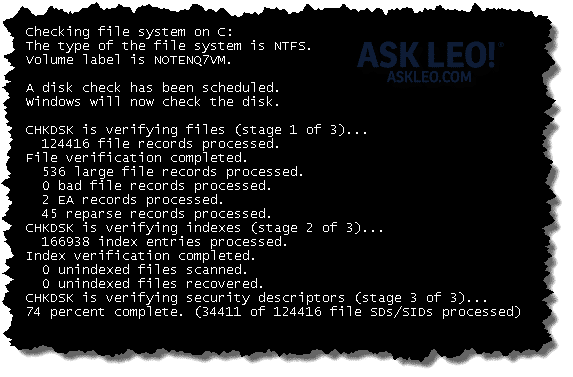
Once completed, Windows will load normally.
Getting the results of a scheduled CHKDSK
A very mutual question is where to get the results of a CHKDSK that ran before Windows started. At that place'southward no pause, and the information shown above disappears as soon equally Windows starts to boot.
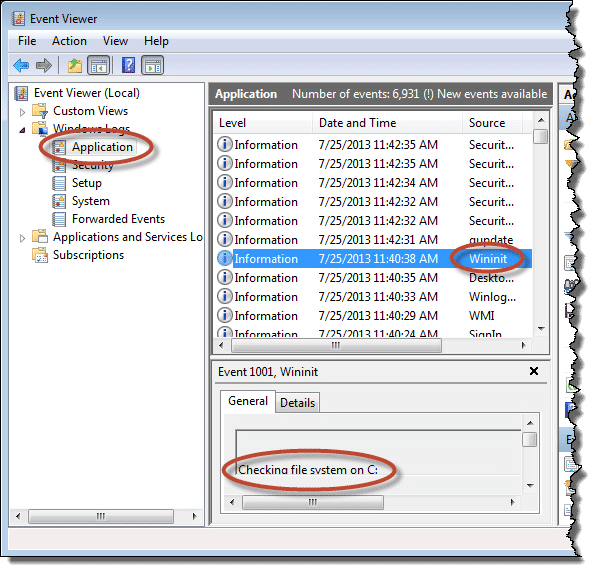
Run the Upshot Viewer past clickingStart, and then Run, (or type Windows Fundamental + R). Enter in eventvwr and click OK.

In Event Viewer, click the Application log nether "Windows Logs". Look for the line item that ends with Wininit (for Windows Initialization) and has "Checking file organization on C:" in the lower Full general tab.
To brand reading the results easier, just double-click on that Wininit line.
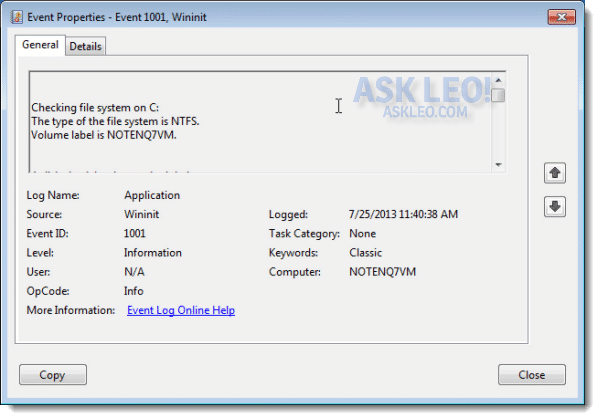
The scrolling box nigh the top contains the results of CHKDSK that scrolled past on the screen before Windows loaded.
CHKDSK via command line
CHKDSK is a command-line tool. All of the options higher up just run that same tool in some way that captures its output.
Yous tin can do that directly yourself.
Click on Outset, All Programs, Accessories, and so right-clickCommand Prompt.
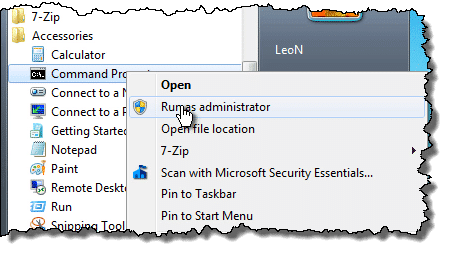
ClickRun as ambassador,consideringCHKDSK does require administrative access to do its job.
In the Command Prompt, type:
CHKDSK /F
…to run CHKDSK with the "/F" or "fix" parameter. Without /F, CHKDSK volition simply study, only not repair, any errors.
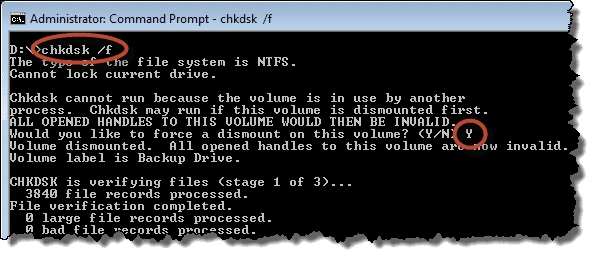
Every bit y'all can see, the example above checks the D: bulldoze, and just as in the windowed interface, CHKDSK must dismount the drive before it can exist checked.
If you lot run CHKDSK against the C: bulldoze,
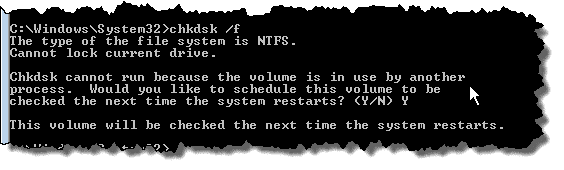
…information technology similarly requests that the CHKDSK be scheduled at the adjacent reboot.
Scanning for bad sectors
Unremarkably, CHKDSK simply checks that the data stored on the deejay is right. In that location's a fair amount of overhead data that tells Windows where files are located and how they're actually stored and distributed around the disk media. CHKDSK uses its noesis of what this information is supposed to look similar to ensure information technology's correct and endeavour to fix it when it's non.
Scanning for bad sectors is another thing entirely. When this option is selected, CHKDSK really reads the entire deejay, not merely the overhead information. As a result, a bad sector scan takes significantly longer than a simple CHKDSK.
Every bit CHKDSK reads, it notices if those reads actually succeed. When they do not, it marks the surface area that failed as "bad" so that the system won't effort to write more information into those areas with problems.
It's important to annotation that this scan doesn't examination whether the information found is adept or valid – only that it can in fact be read.
As we saw earlier, scanning for errors is a simple checkbox when you run CHKDSK from Windows Explorer. For those that prefer the command line, information technology's the "/R" – repair – option.
When to CHKDSK
Normally, CHKDSK only need exist run when a trouble is suspected.
In particular, a browse for bad sectors only needs to be washed one time yous've really encountered a bad sector – usually in the course of a bad read, write, or explicit CRC error. CHKDSK will practise what information technology tin can, but most importantly, it will remove the bad area from apply.
Running CHKDSK to just check the validity of the file system is a quicker operation, and it'southward non unreasonable to run it every so often, particularly if your machine has been crashing. In about cases, Windows will actually strength a CHKDSK after a system crash or improper shutdown. This is done not to fix the cause of the crash (although in some cases it could), but rather to fix whatsoever disk-related bug that may accept resulted from the crash.
What CHKDSK won't do
While we talk about CHKDSK "repairing" a hard disk drive, it is not a data recovery tool per se. Its job is not to recover lost or damaged files, just to ensure that the information currently on the deejay is in a consistent and safe state.
When it comes time to search for files accidentally lost or deleted, then you need to use tools similar Recuva and similar.
If you're trying to recover data from a difficult drive that has a persistent media problem, or is so damaged that a CHKDSK scan for bad sectors can't aid, then a tool similar SpinRite might be your just selection.
Unless, of course, you accept a backup and can simply replace your failing hard drive.
costellothentorcip.blogspot.com
Source: https://askleo.com/checking-and-repairing-a-disk-with-chkdsk/
0 Response to "Chkdsk Goes counts to 75 Then Goes Down to 50 Again"
Post a Comment